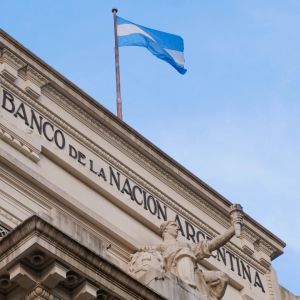
Argentina’s central bank has announced a move to ease daily reserve requirements for commercial banks, allowing them to meet 95% of the obligation instead of the previous 100%. The measure aims to free up liquidity and boost lending amid ongoing economic pressures. This development comes soon after President Javier Milei’s party achieved a critical midterm election victory. As stated before, reserve ratios remain the same and vary depending on the type of deposit or instrument. The primary difference between the current amendment and the previous one is that financial institutions, in addition to maintaining daily compliance stringency, are now permitted to moderate their daily liquidity buffer. Officials say the step is designed to help credit flow to households and businesses while maintaining overall financial stability. According to the press release, the Bank of Argentina describes the revision as the first major policy change since the midterm election, in which Milei’s party received a landslide victory in both chambers of parliament, and the market responded with optimism. The change in Argentina comes after months of high inflation and tight liquidity, which have constrained bank lending. Analysts note that while the easing is modest, it signals the central bank’s intent to support economic activity without triggering major inflationary pressures. Milei’s victory prompts central bank action The easing was warranted following the president’s victory, but also due to pressure from banking representatives. The latter’s leaders had been discussing the matter earlier, arguing that the requirement to set aside the reserves daily forces them to maintain inefficiently large balances . The sector’s leaders had called on the BCRA to adopt a monthly compliance model, but the bank opted for a gradual approach. The regulator, in this instance, assures that the easing is not a full rollback, freeing some liquidity back into the financial ecosystem, but one that will not induce inflation pressure or weaken the peso. The adjustability granted to the banks will facilitate more lending to the business and consumer sectors. The released funds will no longer be held in reserve but will be utilized through lines of credit and investments. Nevertheless, analysts are warning that this is a tepid reform rather than a root-and-branch renewal. Liquidity in Argentina’s financial system is scarce, with the BCRA much more concerned about introducing too many pesos. The eased costs come after a strong few weeks of market performance upon Milei’s presidential win. Investors were cautiously optimistic about the continuity of the short-term trend, a sentiment the BCRA is eager to challenge. Argentina moves to ease tight liquidity Argentina’s banking sector has struggled with liquidity restrictions for well over a year. The interest rate on peso-denominated assets had reached and even surpassed triple-digit figures, depleting profit margins and the demand for credit. Some banks had stopped issuing mortgages in the past few months, given the weakening economy and soaring delinquencies approaching post-crisis highs. The high reserve demands and the fear of issuing loans resulted in a credit freeze that strangled the cash flow of small firms. The Milei regime has expressed its unwavering commitment to maintaining the value of the peso and the trust of the people in the financial system. Therefore, there has been no doubt that the “reserve rules” would be lifted. Although they were tightened recently to ban speculative currency runs on the peso, they also limited most banks’ ability to borrow and lend, prompting demands for a return to greater socialization. Policy makers are likely to proceed conservatively, despite the expectations that further steps towards normality are to be taken. If the peso or inflation were to deteriorate unexpectedly, much as it has done before, global liquidity injections could trigger a panic or surge in currency depreciation that would erase recent value gains. In the short term, banks will utilize the new break to help with daily liquidity management and address immediate financing difficulties. In the medium term, if inflation and currency profits numbers continue, more relaxed reserve rules could be in place. For now, the change is minor in absolute terms, but it exemplifies the intent to continue an economic recovery among Argentina’s banking authorities. Join Bybit now and claim a $50 bonus in minutes